
EMSELLA Pelvic Floor Treatment in London

Non-Invasive Pelvic Floor Muscle Stimulation
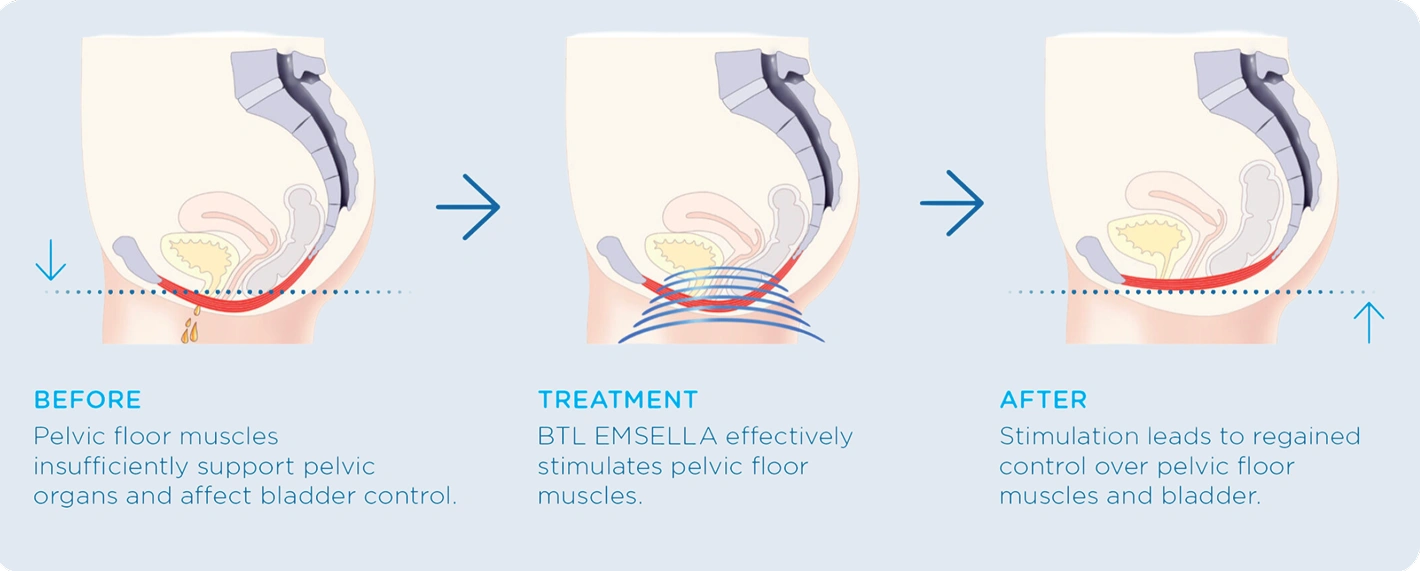
Weak pelvic-floor muscles can contribute to urinary leakage. EMSELLA uses high-intensity focused electromagnetic technology to stimulate pelvic-floor muscle contractions while you remain fully clothed. It is FDA-cleared for the treatment of urinary incontinence. Treatment suitability and results vary, so a consultation is required.
Advanced Pelvic Health Treatment for Women & Men
EMSELLA uses HIFEM technology to stimulate pelvic-floor muscles and is FDA-cleared for the treatment of urinary incontinence. Treatment is non-invasive and performed while fully clothed.
EMSELLA for Women
Consultation-Led Pelvic-Floor Muscle Stimulation
Weak pelvic-floor muscles can contribute to urinary leakage. EMSELLA uses HIFEM technology to stimulate pelvic-floor muscle contractions while you remain fully clothed. Treatment suitability and results vary.
Benefits:
EMSELLA for Men
Pelvic-Floor Muscle Stimulation for Men
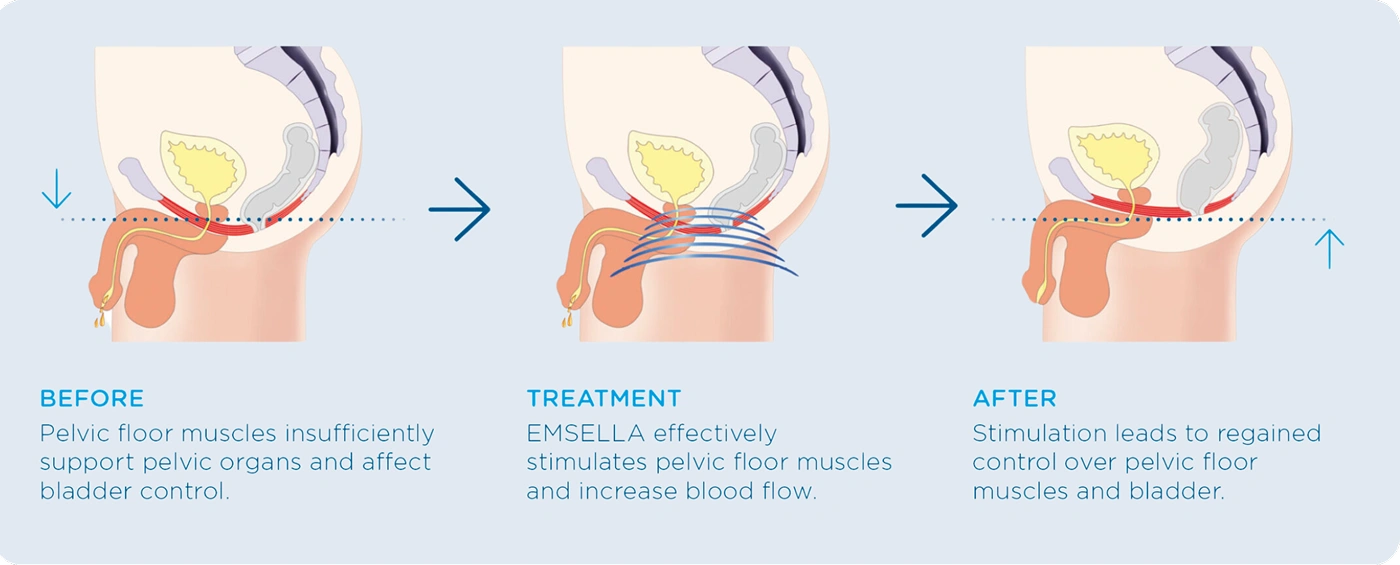
Weak pelvic-floor muscles can contribute to urinary leakage in women and men. EMSELLA uses HIFEM technology to stimulate pelvic-floor muscle contractions while you remain fully clothed. Treatment suitability and results vary.
Benefits:
Thousands of Pelvic Floor Contractions in One Session
Non-Invasive Muscle Stimulation While Fully Clothed
A single EMSELLA session produces thousands of Kegel-like pelvic-floor muscle contractions. It is designed to support muscle re-education without surgery or undressing.

How Does EMSella Work?
EMSELLA uses high-intensity focused electromagnetic technology to stimulate pelvic-floor muscle contractions while you remain fully clothed. It is FDA-cleared for the treatment of urinary incontinence. Treatment plans and results vary, and suitability is assessed at consultation.
Looking for a different result? We also offer EMSculpt NEO body sculpting for muscle conditioning and Sofwave skin tightening for lax skin — or explore our full range of non-surgical treatments in London.
01
Who is Emsella suitable for?
EMSELLA may be suitable for adults seeking help with weak pelvic-floor muscles or urinary incontinence symptoms, including stress, urge or mixed incontinence. A consultation is required to review symptoms, medical history, contraindications and whether this treatment is appropriate. Some symptoms may need assessment by a GP or pelvic-health specialist.
02
What are the contraindications for Emsella?
EMSELLA is not suitable for everyone. Contraindications include certain implanted electronic or metal devices and pregnancy, among other conditions. Complete the medical questionnaire and discuss your health history before treatment; medical or specialist assessment may be required.
03
Is the treatment painful?
EMSELLA is non-invasive. During treatment, you will feel strong pelvic-floor muscle contractions and may feel tingling or discomfort. No planned downtime is usually required, but experience varies. Tell the practitioner if you feel pain or unexpected symptoms.
04
How many sessions will I need?
A treatment plan may include several sessions. The number and spacing depend on the device protocol, symptoms and individual response and will be discussed at consultation.
05
How long do the results last?
Result duration varies with symptoms, health, activity and individual response. Any further or maintenance treatment is considered after review rather than scheduled automatically.
06
Is Emsella safe?
EMSELLA is a non-invasive device treatment used for pelvic-floor muscle stimulation and urinary-incontinence indications. Suitability depends on your medical history and contraindications, which are reviewed before treatment. Side effects and individual experience can vary.
07
How soon will I see results?
Some clients report changes during a treatment course, while others may notice them later. A typical plan may involve several sessions, but the recommended number and timing are personalised. Results are not guaranteed and vary between individuals.
08
Does it really work?
Published studies report improvements in urinary incontinence and quality-of-life measures, but individual results vary. Your practitioner will discuss realistic expectations and the recommended number of sessions.